What is a sort yard in a sawmill operation?
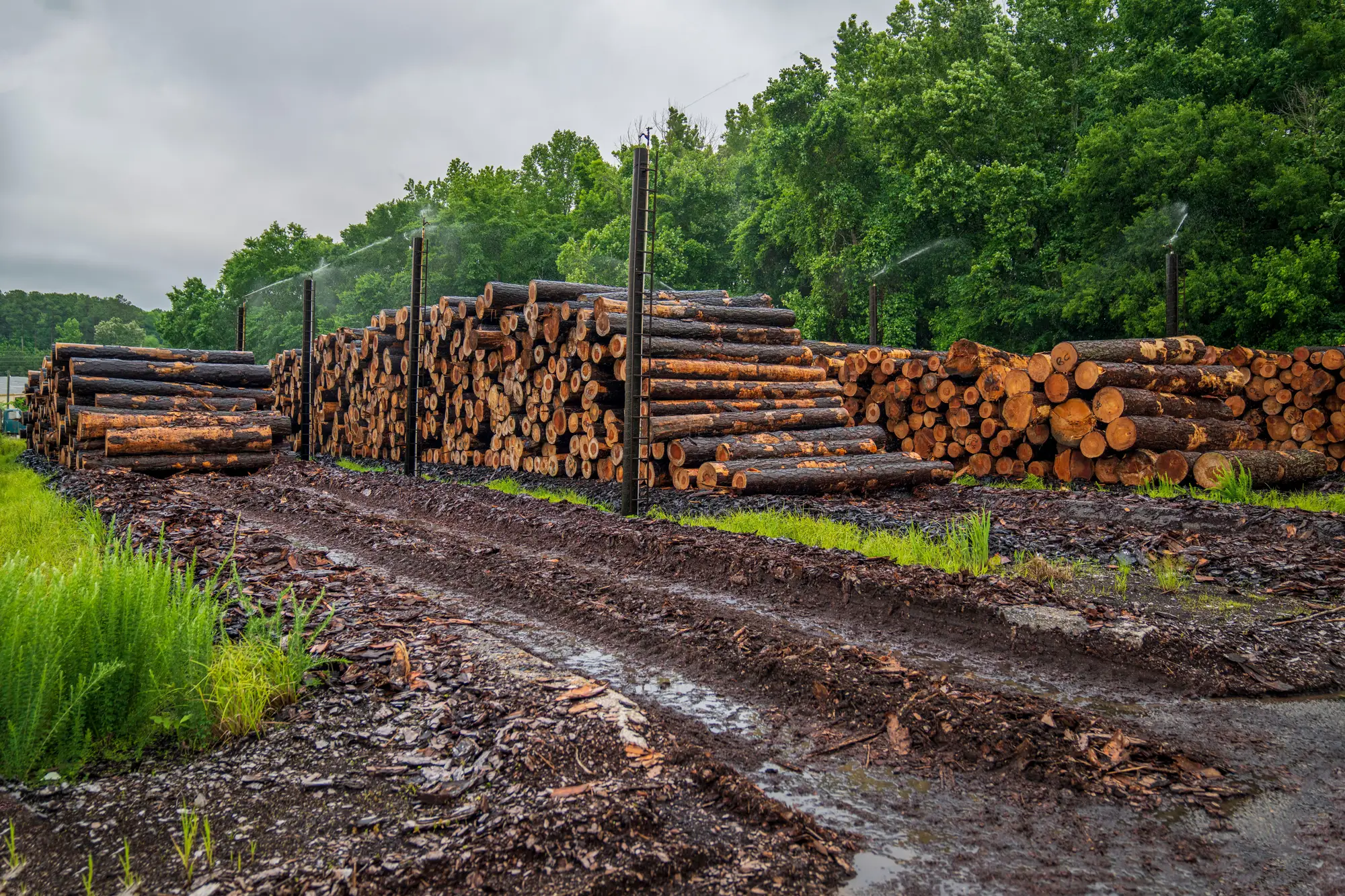
A sort yard is the part of a sawmill operation where logs get separated by species, diameter, length, or grade before they ever reach the headrig. Trucks dump at the deck, a loader or stacker works the pile, and logs get sorted into separate rows so the mill is feeding consistent stock into the breakdown line instead of guessing what's coming next.
If you've only seen a mill from the office or the scale ticket, the sort yard is easy to miss. It's not glamorous. But it's the buffer that decides whether the sawline runs smooth all week or stalls out every time a load of mixed-species logs shows up unsorted.
What a sort yard actually does
Think of it as inventory management with a loader instead of a forklift. Raw logs come in by truck, rail, or sometimes barge, and they rarely arrive already matched to what the mill needs that shift. A fir mill running a particular saw setup doesn't want hemlock mixed into the same deck. A stud mill sorting by length needs 8-footers kept apart from 16s. The sort yard is where that separation happens, one deck at a time, so the log merchandiser or the headrig operator downstream gets a predictable diet of timber instead of a surprise every pass.
Some yards sort by hand-eye judgment from an experienced loader operator who's been reading log quality for twenty years. Bigger operations run mechanical sorters, a chain or conveyor system that reads diameter and kicks logs into bins automatically. Either way, the goal is the same: turn a jumbled truckload into organized decks that match the mill's cutting plan.
Log sort yard layout basics
A typical layout runs a few things in parallel:
- The unload deck, where incoming trucks dump before sorting starts.
- Sort rows or bins, laid out by species, length, or diameter class, usually running parallel so a stacker or loader can work down the line without backtracking.
- A reload or staging area, where sorted decks wait to feed the mill's infeed, get trucked to a different mill, or go to export.
- Travel lanes wide enough for loaders and sometimes log trucks to move between rows without blocking the operation.
Yard layout isn't arbitrary. A yard that's cramped forces more double-handling, which means more loader hours and slower turns on incoming trucks. A yard with good lane spacing and enough deck length can carry more volume in the same footprint without adding equipment. When a yard starts stacking decks higher or widening its sort rows, that's usually a sign the operation is handling more volume than it used to, or trying to.
Sawmill yard terminology worth knowing
A few terms that come up constantly around a sort yard:
- Deck: a pile of logs sorted to a common spec, waiting for the next move.
- Merchandiser: equipment (or a person) that bucks logs to length and sorts them, often positioned between the sort yard and the mill infeed.
- Reach or reach stacker: the machine moving logs around the yard, sometimes a dedicated log stacker, sometimes a loader with a grapple.
- Cold deck: inventory held in reserve, not scheduled to run yet, often built up ahead of seasonal shutdowns or weather-related supply gaps.
- Scale house: where incoming loads get weighed and scaled for volume before heading to the sort yard.
None of this is complicated once you've walked a yard a few times. The hard part, if you're covering accounts rather than running one, is knowing which yards have grown their sort operation enough to need another stacker or loader before anyone there picks up the phone to tell you.
That's the gap Timber Yard Equipment is built to close, reading equipment counts and deck volume across a territory on a quarterly pass so you know which yards are worth a call before a competitor beats you to the order. Worth a look next time you're planning which accounts to visit first this quarter.