Read the yard before you call the mill.
Every quarter, a count of the stackers, cranes and loaders in each timber yard on your list, plus a read of how full the log decks are.
01The job today
How you judge a mill today
You cover a list of sawmills and timber yards, and from the truck you can see almost none of them. So you work the phone. The wood procurement manager says things are steady. The yard superintendent says the old loader is holding up. Sometimes your route passes a gate and you look over the fence, which tells you about one afternoon.
The mill's own production numbers come later, and they describe the mill, not the yard. A deck can run fuller for months and the loader fleet can age in the meantime, with nobody raising a hand. The first time you hear that a yard needs a machine is often when another rep has already been in the office, or when something has broken down.
So the quarterly territory review gets built on a mix of phone calls, old service tickets and memory. Busy yards and quiet yards look the same on the list. You spend a day driving to an account where nothing is changing, and the one that is stacking decks higher than last spring goes unvisited.
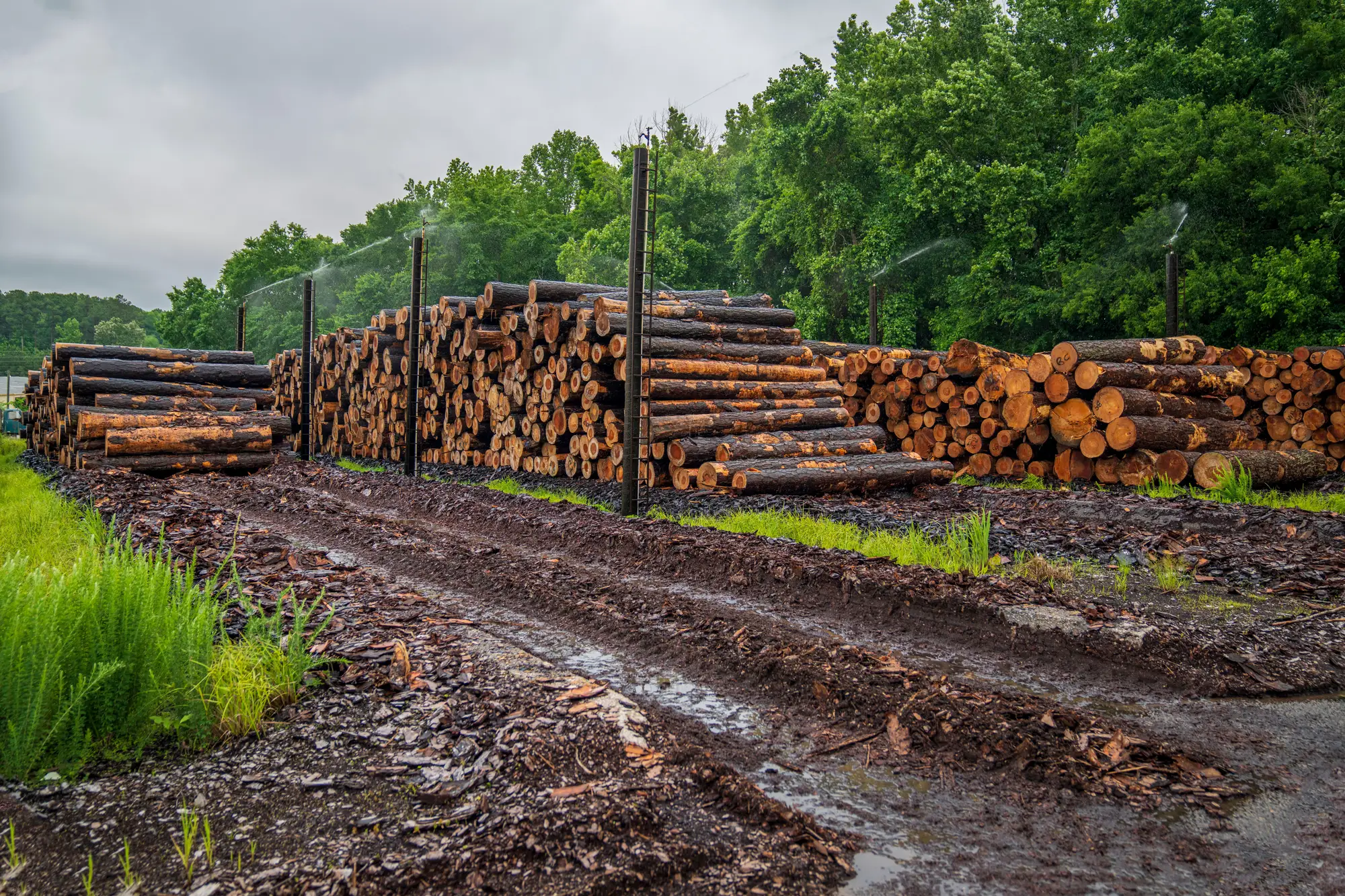
What changes here is small. Each quarter you get a count and a read for each yard we cover, taken from above, so you can rank the list before you pick up the phone.
02What you get
What comes back each quarter
Early access means the first reps who use it help shape it. The items below are what a first yard read is meant to contain.
Per yard, each quarter
A per-yard equipment count
Stackers, cranes and loaders counted by visible type in the open yard, one line per yard covered. It is sized to drop into the account record in your CRM.Note 3
Per yard, each quarter
A deck-volume estimate
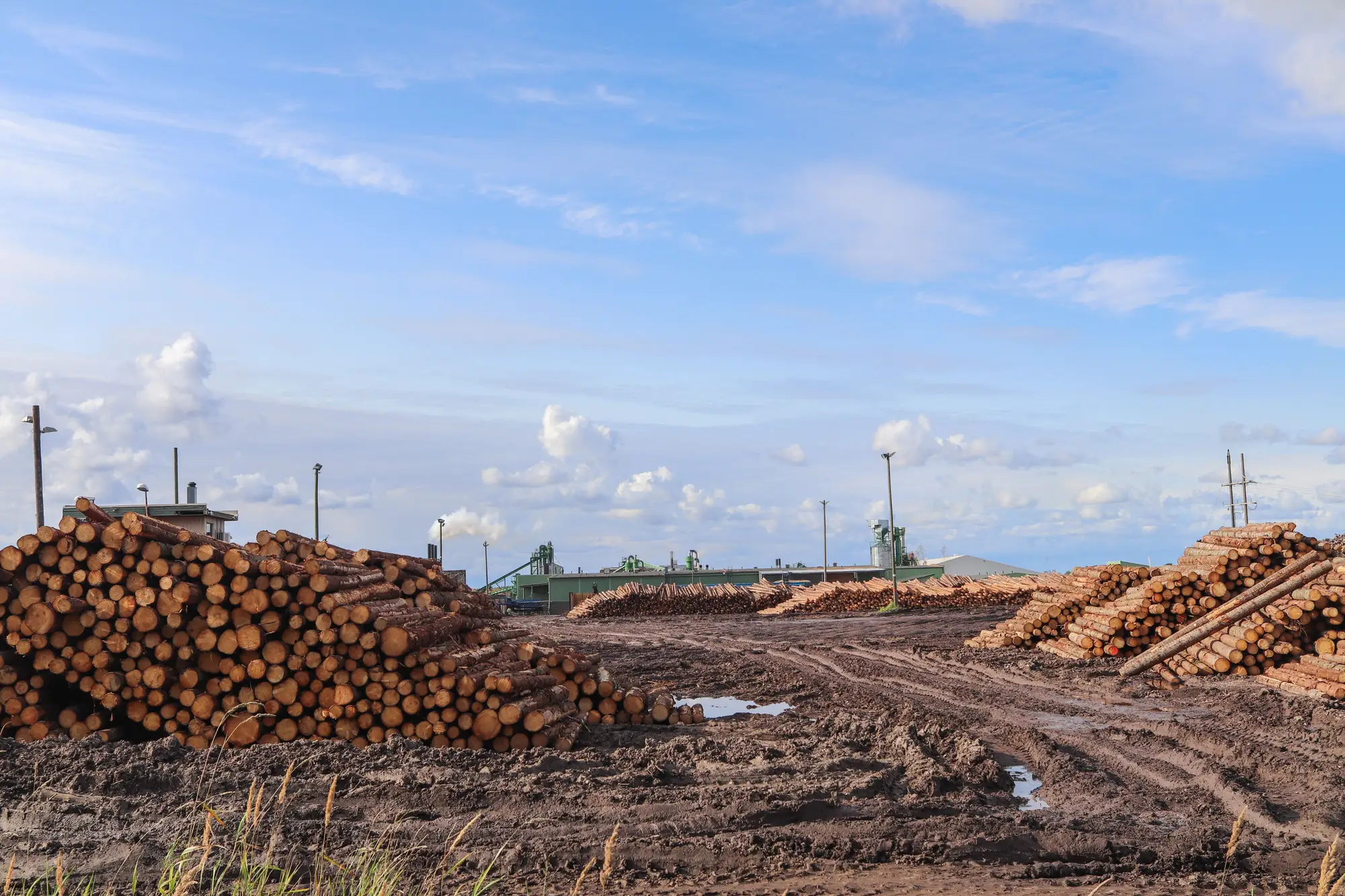
The area the log decks cover, read as a rough sign of how busy the mill is. It is an area-based proxy from pile extent. It is not a cubic measure and not a mill output figure.Note 1
Across quarters
A quarterly trend
Busier or quieter than last quarter, yard by yard, so the territory review can start from the movers instead of the whole list.
03How it works
How it works
Send the yard list
Tell us which mills or which region you want covered, with yard locations if you have them.
Imagery
A very high resolution satellite or aerial pass over each yard, once a quarter.Note 6
Counting and measuring
Handling equipment is counted by visible type, and the log decks are outlined so their area can be compared from one quarter to the next.Note 4
Delivery
An equipment count and a deck-volume read for each yard, with the image date, and the change since the last quarter once there is one.
04Where it fits in your work
Before you decide which mill to call first
Yards trending busier are worth a call earlier, as possible prospects for new or additional equipment. The quarterly read feeds the territory review directly, and it gives you something to set beside mill-reported production figures, which arrive late.
05Notes 1 to 6
Limits
These are the ways a yard read can mislead you. Keep them in mind when you rank the list.
- Note 1
Deck volume is an area proxy
The estimate comes from how much ground the decks cover. Height, density and species are invisible from above, so it says nothing about cubic volume or what the mill actually cut.
- Note 2
Covered areas stay hidden
Anything under a roof or a canopy is not in the image. The count reflects the open yard only.
- Note 3
Type, not brand
Machines are counted by the type you can see. The page will not tell you whose machine it is, and at this resolution a stacker and a loader parked close together can be hard to tell apart.
- Note 4
Resolution sets a floor
At 0.5 m a pixel, a large handling machine is only a few pixels across. Small vehicles and attachments are not counted, and an image at the coarse end of the range will separate machine types less well.
- Note 5
Snow and shadow
Snow can bury the edge of a deck and change that quarter's read. Long winter shadows can hide a machine.
- Note 6
Quarterly is a target
The pass lines up with a quarter. It is not continuous, and a cloudy window can push a yard's image to the next one.
06Fit
Who it's for
For
- Sales reps and dealer salespeople at material-handling and forestry equipment makers who cover mill and timber yard accounts.
- Territory managers who run the quarterly review and want a yard-level signal to put on the list.
Not for
- Teams that need a measured inventory or a mill output figure. Those come from a scale house or a survey.
- Equipment identification by brand or model, or a service history for a specific machine.
- Continuous yard watching. This is a quarterly read.
07FAQ
Questions from reps and sales ops
Is the deck-volume estimate a production figure?
No. It is an area-based proxy from the extent of the piles. It is not a cubic volume and it is not what the mill cut.
Can it count equipment under a roof?
No. Covered handling areas are not visible, so the count covers what is in the open yard.
Does it identify equipment brand?
No. Machines are counted by visible type, not manufacturer.
How current is a quarterly read?
It is as current as the pass. Each read carries its image date, and nothing is continuous between passes.
What if the yard is under snow?
Snow can hide the edge of a deck and make that quarter's volume read less reliable. The read says so when it happens.
How do we check it against what we know about our accounts?
You know which yards have which machines, because you sold many of them. Compare the count with your own records for a few accounts during the pilot and tell us where it misses.
Will it fit into our CRM and territory review?
The aim is a per-yard table you can load into the account records. The exact format is worked out with the first users.
Who owns the data, and how is it priced?
Use and ownership terms are written into the agreement before work starts. Pricing depends on the number of yards and how often you want them covered, and is quoted on its own.
Get your first yard read.
Tell us which mills are on your list, or ask in the chat.