Pedestal-mounted vs. mobile log loaders: telling them apart from above
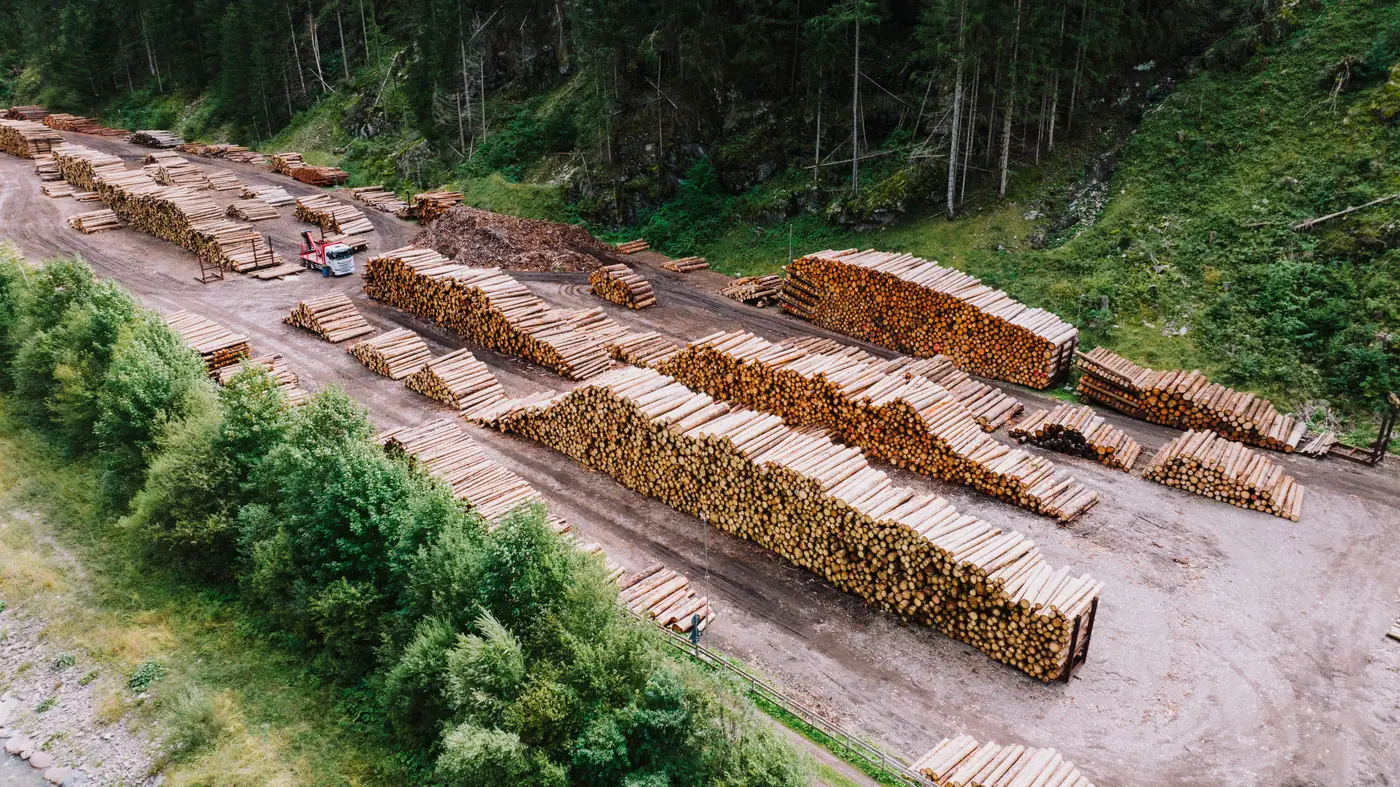
From 500 km up, a log loader is a loader. Boom, grapple, cab, a scatter of logs nearby. But if you're trying to work out what a yard is running, the difference between a pedestal-mounted unit and a mobile loader matters a lot, and it shows up reliably once you know what to look for.
Start with the base, not the boom
A pedestal-mounted loader (a Barko, a Prentice knuckleboom, or any fixed slewing loader bolted to a stand) sits on a concrete or timber pad that doesn't move between imagery passes. Look for a small, dark, roughly circular footprint at the base, often with a worn or packed-earth ring around it where the boom has slewed through the same arc thousands of times. That ring is the tell. Mobile equipment doesn't leave it, because mobile equipment doesn't stay in one spot long enough to wear one in.
A mobile log loader, whether it's a wheeled knuckleboom carrier or a rubber-tired log stacker working the deck rows, sits on tires or tracks and shows up with a longer, more irregular shadow footprint. The chassis reads as a rectangle with wheel shadows at the corners, not a round base. And its position on one quarterly pass has no reason to match its position on the next. A pedestal unit, by contrast, is in the same five square meters every time you look, because it's anchored there.
Use shadow angle to confirm, not to decide
On a low sun-angle pass, the pedestal loader throws a tall, narrow shadow straight down from the cab and mast, with the boom's shadow sweeping off to one side in whatever position it was left. The base shadow itself is compact and doesn't shift shape pass to pass, just rotates with the boom. A mobile loader's shadow is longer and lower along the chassis, with the tires or track reading as a distinct darker band under the body. If the sun angle is high and shadows are short, this gets harder to read on a single image, which is exactly why the footprint and the pad matter more than the shadow: the pad is there whether the sun cooperates or not.
One more confirming detail: rail-mounted log stackers at larger mills, the kind that ride a fixed rail along a deck row instead of slewing from a pedestal, show up as a straight linear track rather than a circular wear ring. If you see a loader sitting on a visible rail line instead of a pad, that's a third category, not a mobile unit misread.
Why the distinction is worth making at all
A yard with pedestal-mounted loaders is usually built around a fixed deck layout: log decks positioned within reach of a stationary boom, truck unloading happening at a set spot, inventory piling up in a known pattern. A yard running mobile loaders or stackers instead is more likely moving logs around as volume shifts, which is itself a signal about how the yard is operating and how much deck space is actually in play. If you're trying to read a yard's activity level without driving out there, which machine type dominates the lot tells you something about how that yard is run before you even get to counting units.
That's the core of what we built Timber Yard Equipment to do: a quarterly pass that counts stackers, cranes, and loaders across the yard and reads deck volume as a rough throughput proxy, so you know which accounts are busy enough to need new equipment before the mill calls anyone.
If telling pedestal units from mobile loaders at a glance would save you a windshield-time visit, that's exactly the kind of read this service is built to hand you every quarter.