How many log stackers does a typical sawmill yard run?
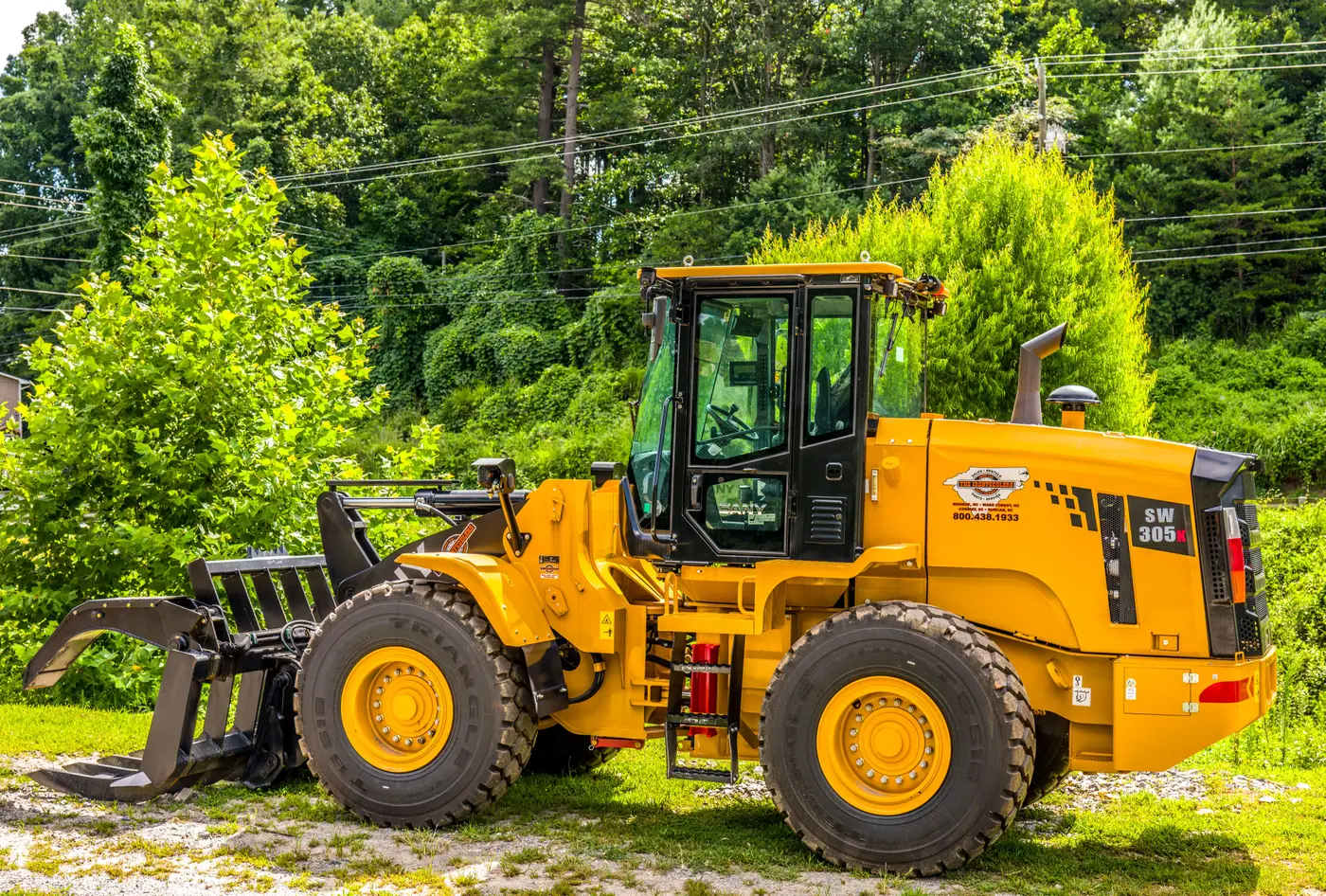
If you sell into sawmill and timber yard accounts, you've probably been asked some version of this by a sales manager who wants a target list: how many stackers does a yard this size actually need? There's no single number that holds up across regions, species mix, or mill configuration, but there's a way to think about it that beats guessing from the road.
What drives the count, not just the acreage
A log stacker's job is to move wood from the truck dump to the deck, and from the deck to the infeed, fast enough that the mill never waits on wood. That means fleet size tracks throughput and deck turnover a lot more closely than it tracks yard acreage. A small yard running two shifts and turning its decks quickly can run more stackers than a sprawling yard that only operates one shift and stockpiles for seasonal supply.
A few things that push the count up or down at any given yard:
- Shift structure. A mill running two or three shifts needs stackers available across all of them, which usually means more units than headcount alone suggests, since machines need rotation for maintenance.
- Species and log length mix. Mixed-species yards sorting multiple decks by diameter class or length often need a dedicated stacker per deck group rather than one machine working the whole yard.
- Deck layout. Yards with long travel distances between the dump area and the infeed burn more cycle time per load, which either slows throughput or pushes a yard to add a machine to hold pace.
- Backup and redundancy. Most yards run at least one spare or swing machine so a breakdown doesn't stall the infeed. That spare often doesn't show up in a quick visual count from the road.
Put those together and the honest answer most OEM reps already suspect holds up: the count tracks the mill's volume, and it shifts faster than any windshield survey can catch. A mill cutting modest volume on a single shift might run two or three stackers comfortably. A high-volume mill running multiple shifts and sorting several species can run well into double digits once you count loaders and cranes doing stacker-adjacent work.
Why fleet size is a better signal than a one-time count
The number that matters to a sales territory isn't "how many stackers does this yard have right now." It's whether that number is trending up because the mill is adding shifts or expanding deck capacity, or trending down because volume is softening and the yard is parking equipment. A single site visit gives you a count at one point in time. It doesn't tell you if that count is three machines on their way out at end-of-life with no replacement ordered, or three machines straining to keep up with a deck that's grown since the last time anyone from your territory walked the yard.
That's the gap between a benchmark number and a useful sales signal. Equipment count by itself is a snapshot. Equipment count compared against deck volume over a few quarters tells you whether a yard is busy enough to need another stacker before the mill manager picks up the phone, or whether the fleet you're seeing is already more than the current throughput justifies.
This is the reading we built Timber Yard Equipment to do. Instead of a rep driving the circuit or guessing from a dated aerial photo, it reads log stackers, cranes, and loaders across sawmill and timber yard accounts on a quarterly pass, alongside a deck-volume estimate for each site, so you can see which yards' equipment counts are keeping pace with their log decks and which ones are falling behind.
If your territory is big enough that you can't eyeball every yard every quarter, that's worth a look before your next call list gets built from memory.