Field notes: the week every yard in the valley started stacking ahead of breakup
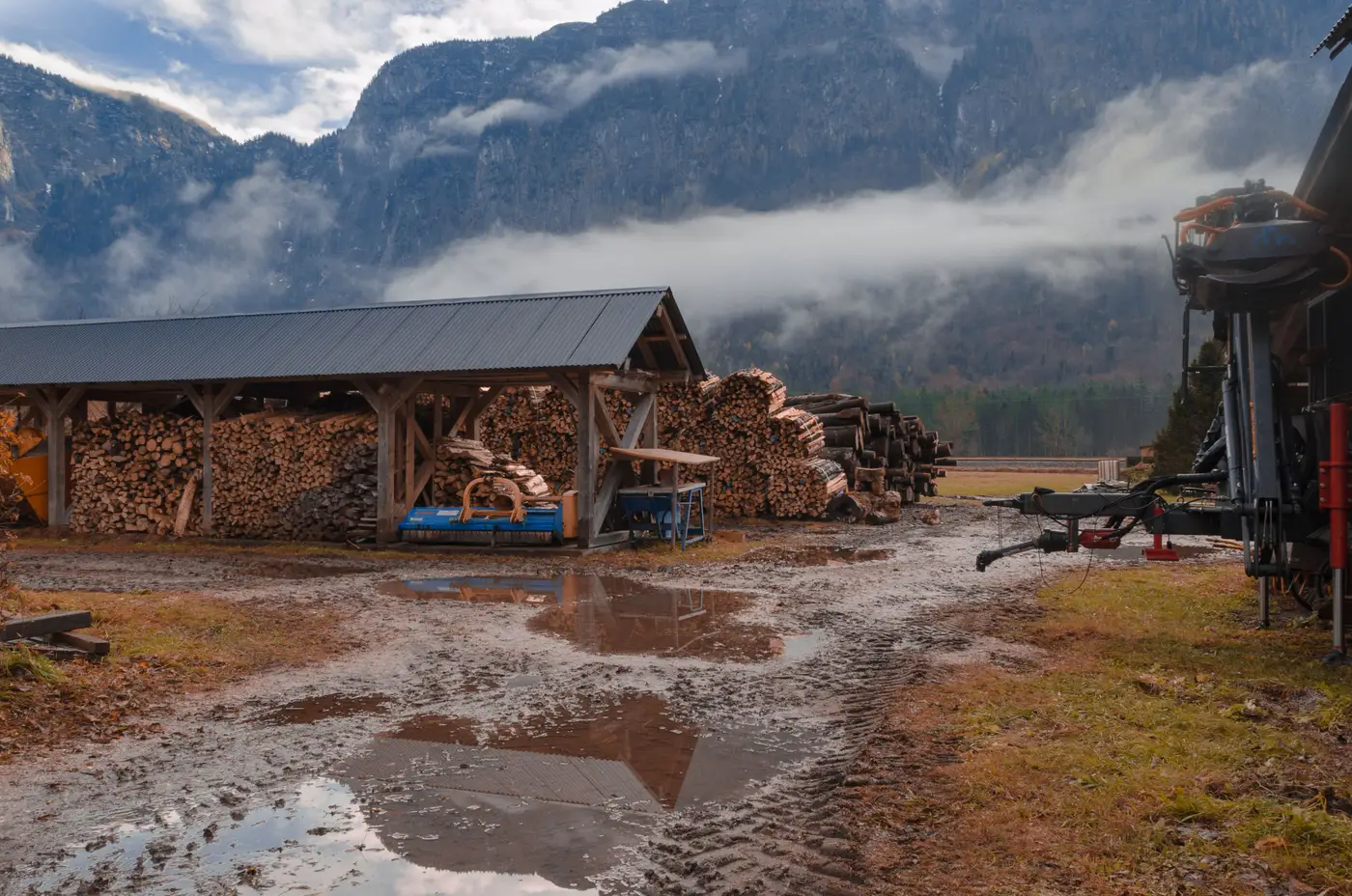
It happened the same week it always happens, and it still catches people off guard. Three yards in, I started asking the scale house guys if someone had sent a memo around.
They hadn't. Nobody coordinates this. But drive the valley in late winter, right when the overnight lows stop dipping hard enough to keep the frost in the ground, and you'll see every yard from the river bottom up to the bench start building deck instead of drawing it down. Loaders running longer shifts. Decks climbing past where they usually sit this time of year. A stacker working a Saturday at a yard that normally shuts down tight on weekends.
None of it is a coincidence. It's breakup math, and every mill manager in the county is doing the same arithmetic at the same time because they're all reading the same thermometer and the same county road postings.
The logic is simple once you've seen a few of these. Haul roads built on anything but rock turn to soup the minute the frost comes out of the subgrade. Counties and private landowners start posting weight restrictions, sometimes with a week's notice, sometimes with three days. A log truck that was running 48-ton loads on Tuesday might be capped at half that by Friday, or shut out of a road entirely until it dries and firms back up. That can run four weeks. It can run eight, depending on how the spring goes.
A sawmill doesn't stop needing logs because the roads are mud. The saw still runs, the planer still runs, the payroll still goes out every two weeks. So the only lever a mill has is the deck. Build it high enough in February and March, while the ground still holds a truck, and you've got enough on the ground to feed the carriage through breakup without paying whatever premium the handful of yards with paved access decide to charge once the open-market log price spikes.
That's why the stacking shows up as a pattern instead of a handful of one-off decisions. Nobody's expecting a big year out of this. Everyone's hedging against the same six-to-eight-week stretch where the trucks can't move.
What's interesting from where I sit is how uneven the response is yard to yard, even among outfits pulling from the same drainage. Some yards stack early and hard, clearly running a playbook they've used for twenty years. Others seem to get caught flat, start stacking late, and you can tell by the equipment on site, an extra loader brought in on short notice, a second stacker that wasn't there in January, that they're playing catch-up against a calendar that doesn't care how prepared they are.
That gap matters if you sell into this trade. The yard scrambling in March is the one that needs a loader or a stacker this year. The yard that planned ahead already has the iron to handle it. The trouble is you can't tell which yard is which from the highway, and a guy can't drive every access road in a six-county territory every time the weather turns.
This is more or less the exact gap we built Timber Yard Equipment to close. A quarterly pass reads the equipment on the ground at each yard, loaders, stackers, the cranes, and sizes up the log decks themselves as a rough read on how much a yard is moving. You don't need to drive out to see who's stacking hard this breakup and who's still caught short.
If you're trying to figure out which yards in your territory are feeling the mud-season squeeze before anyone there picks up the phone, that's worth a look.